
Occupancy Intelligence
Occupancy Measurement vs. Occupancy Management: Understanding the Difference
July 22, 2026 · John Kunzier · 3 min read
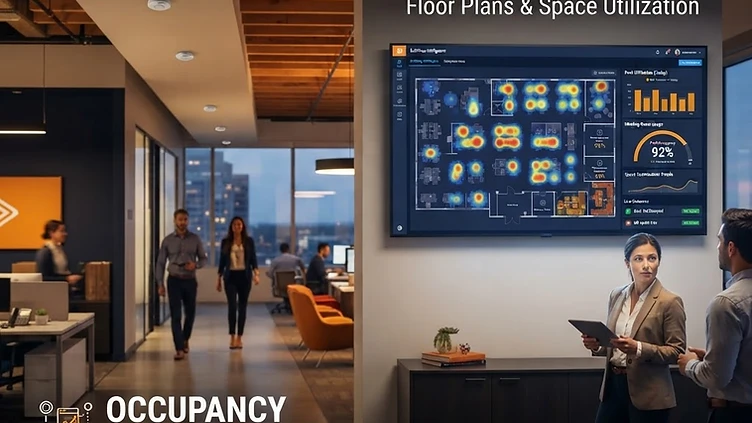
While organizations continue to optimize workplace utilization, reduce real estate costs, and comply with return-to-office initiatives, two terms are often used interchangeably: Occupancy Measurement and Occupancy Management.
While related, they represent two different capabilities. Comprehending the distinction is critical for facility managers, workplace strategists, and government agencies evaluating occupancy solutions.
Both Occupancy Measurement and Management provide critical information to the organization and influence other building disciplines, such as energy management, space planning, parking requirements, catering, and more.
Understanding Occupancy owns the critical building variable for optimizing space operations.
Occupancy Measurement: Counting People
Occupancy Measurement answers a simple question:
"How many people are in the building?"
Measurement technologies focus on collecting occupancy data at entry and exit points. Common methods include:
-
People counters at entrances.
-
Video analytics systems
-
Door access control systems
-
Badge swipe data
-
Infrared or radar-based counting sensors
These systems supply valuable information such as:
-
Daily building attendance
-
Peak occupancy periods
-
Entry and Exit Trends
-
Building utilization percentages
For many organizations, this information is sufficient to understand overall attendance and support portfolio-level planning. Occupancy measurement provides critical foot traffic flow for operational planning, security, and lease management for property and facility managers.
Occupancy measurement does not explain how spaces are used once people enter the building.
Occupancy Management: Understanding Space Utilization
Occupancy Management answers a much broader question:
"How are people using the spaces inside the building?"
Rather than simply counting occupants, occupancy management analyzes utilization across several space types using workplace planning standards such as the ANSI/BOMA methodology.
This includes measuring utilization of:
-
Individual workstations
-
Office assignments
-
Shared workspaces
-
Hoteling desks
-
Conference rooms
-
Collaboration areas
-
Break rooms
-
Training spaces
-
Common areas
Occupancy management provides insights into questions such as:
-
Which workspaces are underutilized and when?
-
Are meeting rooms appropriately sized?
-
How are cooperation spaces performing?
-
Are shared spaces being over-booked and under-utilized?
-
Are there opportunities for consolidation?
-
Is space allocation by department or business unit?
-
Future real estate requirements
In short, occupancy management transforms occupancy data into actionable workplace intelligence.
Why the Difference Matters
Organizations initially believe they need occupancy management when they are actually seeking occupancy measurement.
A recent government workplace utilization Request for Information (RFI) provides a good example.
The agency's original request referenced occupancy management and workplace utilization objectives. However, during the question-and-answer period, vendors sought clarification on the required level of measurement.
The agency clarified that occupancy reporting was required at the asset (building) level, not at the floor, workspace, or individual room level.
This distinction significantly changed the solution requirements.
Because the agency only requires building-level occupancy data, technologies such as:
-
Entrance counters
-
Access control integrations
-
Building occupancy sensors
could satisfy the requirement without deploying a comprehensive occupancy management platform.
The agency was seeking occupancy measurements at the building level rather than detailed space-utilization analytics.
Choosing the Right Approach
Organizations should first determine the business question they are trying to answer.
If the goal is:
-
How many people came into the building?
-
What is average daily attendance?
-
What are peak occupancy levels?
-
Are return-to-office policies followed?
Then, the Occupancy Measurement is sufficient.
If the goal is:
-
How are workspaces utilized?
-
Which departments need more or less space?
-
How effective are collaboration areas?
-
Can real estate costs be reduced through optimization?
Then, Occupancy Management provides detailed space utilization information.
The Future: Combining Both Approaches
The most successful workplace programs combine occupancy measurement with occupancy management.
Building-level occupancy data provides an accurate understanding of general attendance, while workspace-level utilization data shows how people interact with the environment once they arrive.
Together, this information enables organizations to take informed decisions about workplace strategy, employee experience, and real estate investments.
The key is recognizing that counting people and understanding space utilization are not the same thing. Occupancy Measurement tells you who arrived. Occupancy Management tells you how the workplace is performing.